


 Atlanta Hawks
 Boston Celtics
 Brooklyn Nets
 Charlotte Hornets
 Chicago Bulls
 Cleveland Cavaliers
 Dallas Mavericks
 Denver Nuggets
 Detroit Pistons
 Golden State Warriors
 Houston Rockets
 Indiana Pacers
 Los Angeles Clippers
 Los Angeles Lakers
 Memphis Grizzlies
 Miami Heat
 Milwaukee Bucks
 Minnesota Timberwolves
 New Orleans Pelicans
 New York Knicks
 Oklahoma City Thunder
 Orlando Magic
 Philadelphia 76ers
 Phoenix Suns
 Portland Trail Blazers
 Sacramento Kings
 San Antonio Spurs
 Toronto Raptors
 Utah Jazz
 Washington Wizards





Other Leagues
Ferrari’s Civil War: Why Elkann’s “Talk Less” Mandate Dooms the Prancing Horse
Nov
It was a tale of two Ferraris on Sunday. On one hand, the brand ended a 53-year wait for a sports car title by winning the World Endurance Championship (WEC)—the series famous for Le Mans. On the other, the F1 team suffered a humiliating double DNF at the São Paulo Grand Prix, hurtling toward its third winless season of the 2020s.
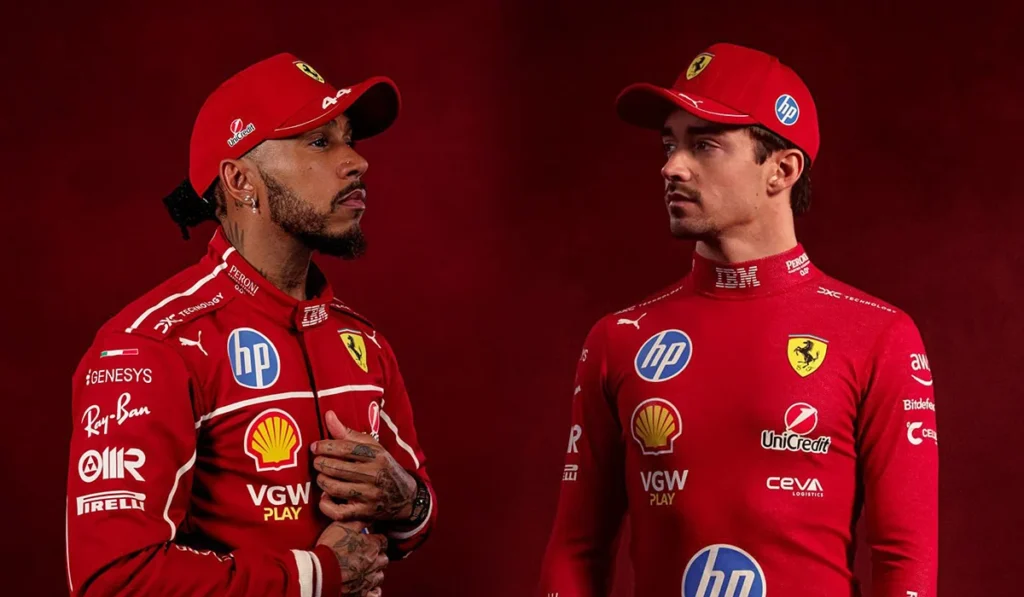
Rather than address the systemic failures of the F1 operation, Elkann chose to target the only two assets keeping the team relevant: Lewis Hamilton and Charles Leclerc.
The Chairman’s Attack: “Talk Less, Drive More”
Elkann’s comments were remarkable for their brazen deflection. “Brazil was a huge disappointment,” he admitted, before pivoting to a baffling assessment of the team’s hierarchy.
“If we look at our engineers, there’s no doubt that the car has improved. If we look at the rest, it’s not up to par. We certainly have drivers for whom it’s important that they focus on driving and talk less…” — John Elkann
The implication is clear: The car is fine; the drivers are the problem. He even rubbed salt in the wound by comparing the F1 struggles to the WEC triumph, stating, “When Ferrari is a team, we win.”
To anyone outside the Maranello bubble, this smacks of arrogance. A Ferrari spokesperson tried to spin the comments as “constructive,” but let’s call it what it is: a public dressing down of two of the grid’s brightest talents by a man leading a company that hasn’t won a Constructors’ Championship since 2008.

Ferrari’s Charles Leclerc and Lewis Hamilton sit fifth and sixth, respectively, in this year’s drivers’ championship.
The Reality Check: Drivers vs. The Machine
Elkann claims there is “no doubt the car has improved.” With all due respect to the Chairman, there is plenty of doubt.
While rivals like Red Bull and McLaren have made tangible leaps forward—Red Bull’s upgrades at Monza propelled Max Verstappen back into contention—Ferrari has stagnated. The team has failed to master basic technical elements like ride height, a specific struggle for Hamilton this season.
Let’s look at the cold, hard statistics of 2025:
-
Current Standings: Leclerc sits 5th and Hamilton 6th.
-
The “Underperforming” Drivers: Despite the machinery, Leclerc has dragged the car to 7 podiums and 2 pole positions (and it likely would have been 8 podiums if not for the crash with Piastri and Antonelli). Hamilton managed a sprint pole and victory in China.
-
The Development Gap: Ferrari has not made a single game-changing step forward this year.
To suggest these results are due to drivers “talking too much” rather than a fundamental engineering deficit is like bragging about a new TV when your house doesn’t have a roof.
History Repeats Itself: A Culture of Silence
Ferrari has a long, painful history of silencing drivers who dare to point out the Emperor has no clothes.
-
1991: Alain Prost was sacked on the spot for comparing his uncompetitive Ferrari to a “truck.”
-
2016: Sebastian Vettel was publicly dressed down by then-boss Maurizio Arrivabene for being too critical during a winless season.
Now, it appears to be Hamilton’s turn. Reports suggest that Hamilton, the sport’s winningest driver who has seen every type of F1 era since 2007, provided extensive notes and audits on where the car was failing. Instead of embracing this feedback from a seven-time champion, sources inside Maranello suggest it was resented.
When you dismiss the feedback of the greatest driver in history, you aren’t protecting the team’s honor; you are protecting its ego.
The “Dallas Cowboys” Problem
Elkann’s comparison to the WEC victory requires a massive asterisk. The WEC operates with a “Balance of Performance” system designed to help new entrants like Ferrari compete immediately. F1 is a meritocracy governed by a ruthless cost cap.
Ferrari is currently suffering from what we can call the “Dallas Cowboys Syndrome.” They are the richest, most prestigious brand in the sport, boasting an unmatched aura. Yet, like the Cowboys failing to reach the Super Bowl, Ferrari seems fundamentally incapable of building the sustained, title-winning operation that Red Bull and Mercedes mastered years ago.
Conclusion: Losing “Il Predestinato”?
The danger for Ferrari is real. Charles Leclerc, dubbed “Il Predestinato” (The Predestined One) by the Italian media, is reportedly considering life after Ferrari for 2026. His loyalty has been unquestionable, but his patience is not infinite.
Ferrari cannot PR-spin their way to a championship. Until John Elkann and the management realizes that unity comes from listening to their world-class drivers rather than silencing them, the 17-year drought will continue. Hamilton backed himself on social media after the outburst, and rightfully so. The question is: When will Ferrari back him with a car capable of winning?


 NFL
NFL NBA
NBA MLB
MLB NHL
NHL Premier League